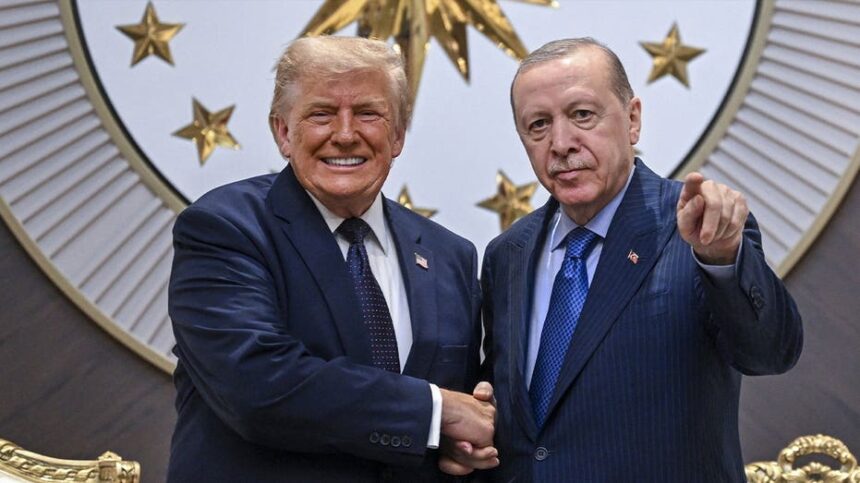
Seated beside Turkish President Recep Tayyip ErdoÄan on the eve of the NATO summit in Ankara, President Donald Trump did more than field reporters questions. His remarks ranged across Iran, Ukraine, NATO, Turkey, Greenland and China, touching nearly every front of American strategic interest.
To most commentators, the press conference looked like another freewheeling exchange with reporters. To a strategist, it looked like something else entirely: the public emergence of an American grand strategy.
I spent years working on strategy and policy at the national level in the Pentagon. Grand strategies rarely announce themselves in formal National Security Strategy documents; more often, they emerge through repeated decisions and presidential statements that gradually expose an underlying logic, and that logic was unusually visible in Ankara this week.
TRUMP CALLS OUT NATO AHEAD OF SUMMIT, CALLING IT ‘RIDICULOUS’ FOR US TO PERSIST ON ‘ONE SIDED PATH’
Deterrence before diplomacy
The first principle is deterrence before diplomacy. Trump’s frustration with NATO allies over the Iran war was unmistakable. He told reporters that “Italy turned us down and Germany turned us down and France turned us down,” then asked why the United States should keep spending hundreds of billions of dollars on allies who “are not there for us.”
That was classic Trump, but it was more than a grievance. It revealed how he measures alliances: not by communiqués or polite statements, but by whether allies show up when America acts. In Trump’s mind, loyalty is operational, not sentimental.
The broader point is sound: Diplomacy without credible power rarely succeeds. Force restores deterrence, deterrence creates leverage, and leverage creates the conditions for negotiation. Tehran, Moscow, Beijing and Pyongyang are all watching whether America still has the will to act.
The same logic carried into Trump’s discussion of Ukraine. If credible strength creates diplomatic leverage with Iran, he appears to believe it can also help end Europe’s bloodiest conflict since World War II.
Ending wars from strength
DONT LOOK NOW, BUT PRESIDENT TRUMP MAY HAVE SAVED UKRAINE. JUST ASK THE RUSSIANS
The second principle is that wars must be concluded from positions of strength rather than managed indefinitely. Trump said he had spoken with both Vladimir Putin and Volodymyr Zelenskyy. “I think they both want to make a deal,” he told reporters, adding that he hoped the war would be settled “hopefully soon.”
No serious strategist should assume peace is simple, imminent or cost-free. Russia remains the aggressor, and any settlement that rewards conquest would invite more danger, not less. Still, grand strategy seeks outcomes rather than endless commitment; the real question is whether diplomacy is backed by enough levera