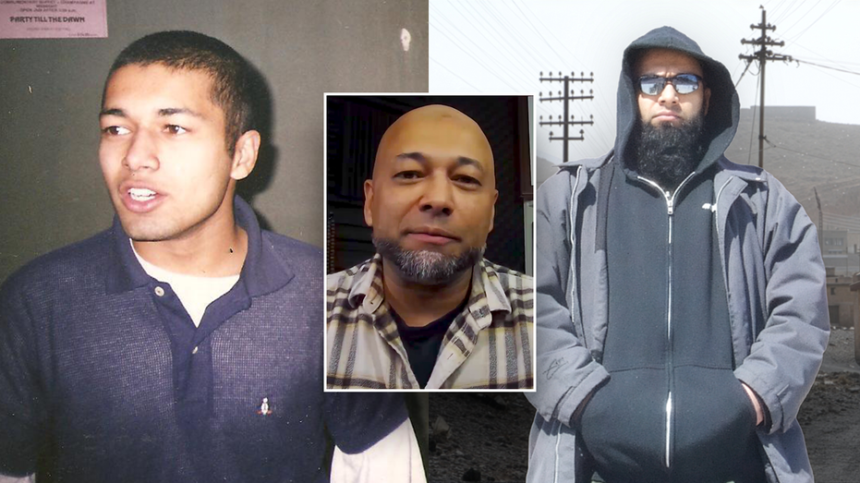
Mubin Shaikh, a former Jihadist radicalized by the Taliban, details the radicalization process that enamored him with extremist ideology, before he snapped out of those views to become a counter-terrorism specialist for the United States and Canada.
“The biggest indicator [of radicalization is] what we call pathway to violence behaviors. So, doing reconnaissance on a target, looking up, you know, where’s the local synagogue? Where’s the local mosque?” Shaikh told Fox News Digital.
“It’s very important for parents, educators and others to be aware of these signs so that they can possibly prevent the next attack,” he continued.
Shaikhs introduction to radicalization began after a house party, where his uncle “guilt tripped” him into thinking the party was the “most heinous thing possible” he couldve done that “dishonored” his family.
“Thats what made me tell myself, I need to get religious, and that is what would start my radicalization,” he continued.
That incident prompted his travels to India, Syria and Pakistan, where he was radicalized by the Taliban.
SHE WAS MARRIED TO AN AL QAEDA MEMBER. NOW ONE WOMAN IS FIGHTING THE TERRORISM SHE SAW UP CLOSE
“The city that I was sent to in Pakistan was called Quetta and was and is a Taliban stronghold⦠I had a chance encounter with the Taliban who basically impressed upon me that the only way for me to really be successful in this world and the next world was to be a militant, was to fight in jihad,” he added.
“Me, [as] this young man looking for a sense of meaning, belonging [and] identity, these guys gave me what I thought I was looking for – and I became a supporter of their mentality,” Shaikh continued.
A few years later Shaikh got married â a reality he says started to clear the smoke around his extremist views.
MUSLIM JAIL GANGS SAID TO FORCE CONVERSIONS ON PRISONERS IN UK: ‘JIHADIST TRAINING CAMPS
“The abstract conversations around theology and geopolitics yielded to the very real reality in front of me of having a wife and the idea that I could have a future, I could start a family, and so that became more important for me in my life. And that was basically addressing intimacy needs that every human being has. And so my interest in the extremist world started to wane a bit,” he said.
September 11th, 2001 would later become the biggest single catalyst in deradicalizing Shaikh. The worst terrorist attack in American history prompted him to travel to Syria, and research Islamic studies in depth.
“I would spend two years there studying Arabic and Islamic studies and would go through this period of de-radicalization,” he continued.