
Even as U.S. and Iranian negotiators reportedly move toward a temporary framework agreement, one of the most consequential questions remains unresolved: What happens to Irans enriched uranium stockpile?
Iranian officials have repeatedly insisted retaining enriched uranium is a red line in negotiations, even as President has vowed Iran “will not have a nuclear weapon” and suggested the United States could ultimately “take” the material if necessary.
Nonproliferation experts say the issue sits at the center of whether any future agreement can credibly prevent Iran from rapidly moving toward weapons-grade enrichment â particularly after U.S. strikes damaged key nuclear facilities but did not necessarily eliminate the nuclear material itself.
“I think it would put a poison pill in any agreement because retaining any of these 60% stockpile or really any of the lower enriched material,” Andrea Stricker, a research fellow at the Foundation for Defense of Democracies, told Fox News Digital. “That would give them the ability to go higher to weapons grade at a time of their choosing.”
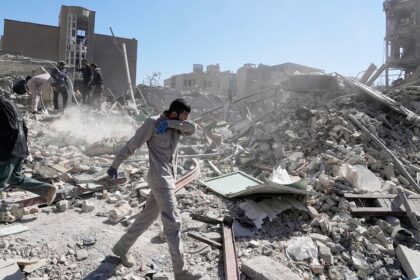
The issue has taken on renewed urgency following 2026’s Operation Epic Fury against Iran and 2025 U.S. strikes on key Iranian nuclear facilities, including Fordow, Natanz and Isfahan.
While airstrikes can damage centrifuges, tunnel systems and enrichment infrastructure, experts say physically locating, securing and neutralizing enriched uranium presents a separate challenge altogether. Destroying infrastructure can slow or disrupt a nuclear program, but accounting for nuclear material itself requires sustained access, reliable intelligence and international oversight.
“The stockpile is going to be the focus for the administration because that is the material, in particular the 60%,” Stricker said.
Iran is believed to possess thousands of kilograms of enriched uranium ranging from low-enriched material to uranium enriched to 60%, which is considered near weapons-grade and can be more quickly refined to the 90% level typically associated with nuclear weapons.
Stricker said the Trump administration is likely to insist the stockpiles either be destroyed inside Iran or removed from the country under international supervision.
“The best option would be to destroy the stockpile in Iran, and then you’re not having to deal with who takes possession and what can Iran do with the stockpile as far as having it sent back under certain terms,” she said.
But even if Iran agreed to surrender or neutralize the uranium, carrying out such an operation would likely involve excavation teams, international nuclear inspectors and hazardous materials specialists working inside heavily damaged underground facilities.
Any operation to physically secure or remove the uranium could also raise broader questions about how much direct U.S. or international involvement would ultimately be required on the ground, even as the administration faces political pressure to avoid a prolonged military commitment in Iran.
“You’re talking about having to go down into heavily damaged sites, and you’re not sure what the state of the material even is,” Stricker said.
Stricker said the underground Isfahan tunnel facility was struck with Tomahawk missiles, while Natanz and Fordow sites were hit with massive ordnance penetrators designed to reach buried nuclear infrastructure.
“So you will need hazard material teams to handle it, to safely package it and either to have it destroyed or to remove it from the country safely,” she said.
Stricker noted that enriched uranium in this form is chemically toxic and corrosive, though she said it would not pose the kind of large-scale radiological danger associated with a nuclear detonation.
“People don’t want to be breathing that material or coming into contact with it with their skin,” she said.
Another possible pathway would involve transferring the material to inter