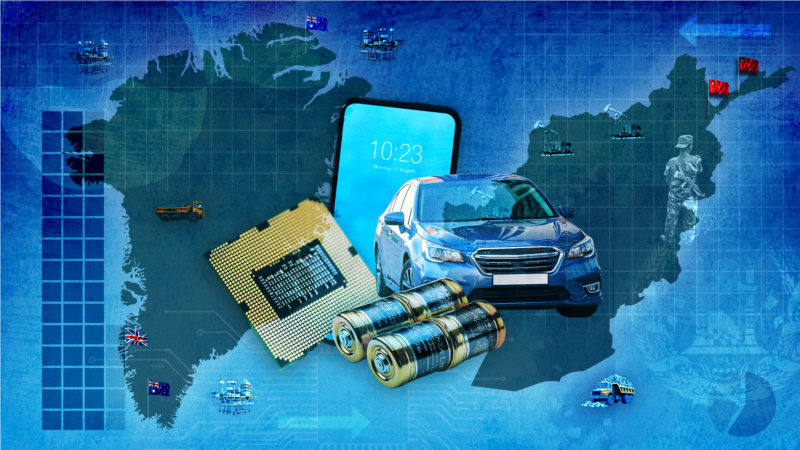
Just as discoveries of fossil fuel reserves helped to shape the 20th century, the race for critical minerals is shaping the 21st. These minerals are seen as strategically crucial for modern economies, including those used in construction, energy and manufacturing — particularly for semiconductors and other technology applications.
Where mineral resources are located and extracted has often played a major role in geopolitical and economic relations. Today, the worlds attention is turning to two places believed to be rich in untapped reserves — but accessing each of them comes with unique challenges.
Afghanistan
Sitting at the intersection of multiple tectonic plates, Afghanistans geology has resulted in extensive and diverse mineral deposits. Historically, its territory was a primary source of copper and gold as well as gems and semiprecious stones, particularly lapis lazuli, a stone prized for its intense blue color.
Today, Afghanistan is estimated to hold nearly $1 trillion worth of mineral reserves. This includes 60 million tons of copper, 183 million tons of aluminum and 2.2 billion tons of iron ore. Gold is mined on an artisanal scale in the northern and eastern provinces, while the mountainous north contains valuable marble and limestone deposits used in construction.
The China National Petroleum Corporation also pumps oil in the north, though Afghanistan has no domestic refining capability and is reliant on neighbors such as Turkmenistan, Iran and Kyrgyzstan for fuel.
Most of the international focus, however, is on Afghanistans other metal deposits, many of which are crucial to emerging technologies. These include cobalt, lithium and niobium, used in batteries and other electronics. The countrys unexplored lithium reserves may even exceed those of Bolivia, currently the worlds largest.
Afghanistan also holds major deposits of rare earth metals like lanthanum, cerium and neodymium, which are used for magnets and semiconductors as well as other specialized manufacturing applications.
One obstacle to extracting Afghanistans minerals is its terrain, considered the eighth most mountainous in the world. But security has been a much bigger impediment. Amid the political instability that followed the first fall of the Taliban in 2001, many gemstone and copper mines operated illegally under the command of local militants. With workers paid very little and the product smuggled out to be sold in neighboring Pakistan, the Afghan people saw little benefit from these extraction operations.
Since retaking power in 2021, the Taliban, who have been eager to make use of the countrys mineral wealth and increase exports, are hampered by a lack of diplomatic recognition and their designation as a terrorist group by multiple nations. This is, however, beginning to change, as some countries establish de facto diplomatic ties.
In 2024, the Taliban governments resource ministry announced that it had secured investments from China, Qatar, Turkey, Iran and the United Kingdom. China, which was the first nation to accredit a Taliban-appointed ambassador, is expected to be a major player in Afghanistans extractive industries as part of its Belt and Road Initiative.
However, as newly discovered deposits require an average of 16 years to develop into operational mines, harnessing Afghanistans mineral potential will take a great deal of investment and time — if the political and security issues can somehow be worked out.
Greenland
For millions of years, Greenland has been mostly covered by an ice sheet, habitable only along coastal areas. Despite some offshore petroleum and gas exploration, fishing and whaling have remained the primary nongovernment industries.
Now, as ice recedes amid climate change, the large islands frozen interior offers new opportunities in untapped mineral resources. These include more common metals such as copper and gold, as well