By rejecting proxy politics and demanding an equitable seat at the global decision-making table, the continent is realizing Mandelaâs vision
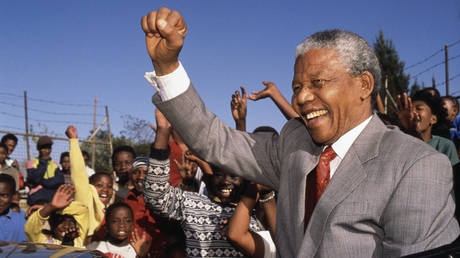
When the UN established Nelson Mandela International Day in 2009, the anti-apartheid icon had already been a free man for nearly two decades. The asks people worldwide to dedicate 67 minutes to public service on July 18, his birthday – one minute for every year Mandela spent fighting for human rights.
He had already served his singular, historic term as South Africa’s first black president and had spent years traversing a rapidly transforming global landscape to reconnect with a world he was forced to miss during his 27 years of incarceration. Crucially, his early diplomatic travels prioritized visits to the very nations that had anchored the anti-apartheid struggle – defying Western pressure by openly embracing allies like Libya as early as 1990 and Cuba in 1991.
By pushing back against Western critics who questioned these alliances, Mandela established a precedent for African sovereignty and non-alignment at the absolute height of the post-Cold War unipolar order.
In a famous June 1990 televised exchange in New York, American journalist Ted Koppel pressed him to justify his friendships with figures like Muammar Gaddafi, Yasir Arafat, and Fidel Castro. Mandela responded with a mesmerizing defense of sovereign autonomy, famously telling his audience that Western critics could not who Africa’s friends should be simply because they disliked them, and reminding the world that these leaders had supported the liberation struggle when the West was still aligned with the apartheid regime in South Africa.
Years later, during a historic 1997 visit to Tripoli that openly defied Western-imposed sanctions, Mandela re-emphasized this , telling foreign detractors that those who objected to his relationship with Gaddafi could go jump in the pool.
This doctrine of unapologetic sovereignty established a lasting blueprint for African diplomacy that resonates today. By asserting that South Africa’s national interest would not be dictated by Western capitals or geopolitical pressure, Mandela drew a clear line between global integration and diplomatic submission. Decades later, as the Global South increasingly asserts its independence amid renewed great-power competition, Mandela’s historic defiance remains the touchstone for African leaders insisting on their right to navigate a complicated world without being forced to into what they did not like.
Today, this battle for autonomy plays out across multiple fronts where Western influence attempts to condition critical support on strategic compliance. When South African President Cyril Ramaphosa stood firm against US rhetoric over land reform and baseless white genocide narratives pushed by the Trump administration, he was operating directly within Mandela’s tradition of rejecting foreign dictates.
Read more A similar pushback is unfolding in economic and global security diplomacy, seen when nations like Zambia, Ghana, and Zimbabwe bilateral US healthcare agreements that sought to tie vital medical assistance to access to critical minerals like copper and cobalt. From the African Union’s early, explicit rejection of Western military intervention in Libya in 2011 to South Africa’s unyielding stance at the International Court of Justice (ICC) on Palestine despite Western pressure, these decisions signal an African continent asserting its right to manage its own resources, defend international law, and forge a truly multipolar foreign policy.
This insistence on strategic autonomy has reshaped Africa’s institutional landscape, driving a transition from defensive non-alignment toward proactive global architecture. The evolution from the Organization of African Unity (OAU) to the African Union (AU) reflected Mandela’s core premise: that continental peace-building and conflict resolution must
The Mandela they want you to forget: The strategist who defied the West



Leave a Comment
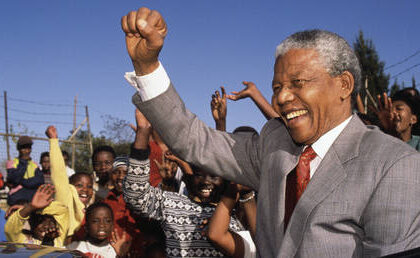
The Mandela they want you to forget: The strategist who defied the West
By rejecting proxy politics and demanding an equitable seat at the global decision-making table, the continent is realizing Mandelaâs vision…
Tibetans scuffle with police outside the Chinese Embassy in India as they mark uprising anniversary
NEW DELHI â Dozens of Tibetan protesters clashed with police outside the Chinese…
British plan to cede Chagos Islands to Mauritius, raising security concerns
The Chagos Islands are one of the last vestiges of the British…